A Voice For Truth -

Suche

Home
Positionserklärung
COVID-19
Infografiken
Videos
Weißbuch
Ressourcen
Über
Kontakt
A Voice For Truth -
  • Home
  • Positionserklärung
  • COVID-19
  • Infografiken
  • Videos
  • Weißbuch
  • Ressourcen
  • Über
  • Kontakt
Christentum, Covid-19 Impfung, Impfstoffe und Abtreibung

Warum der Blackout bei der Forschung zu fötalem Gewebe unter den Pro-Life-Anhängern?

Februar 9, 2022 by Admin Keine Kommentare

The pro-life movement is arguably stronger than ever in the US. We’ve been energized by recent court decisions and hopes of overturning Roe v. Wade.  But, are we prepared to see how deep the evil really goes? Note: The following article originally appeared in Crisis Magazine on January 31, 2022, and is reprinted with permission.


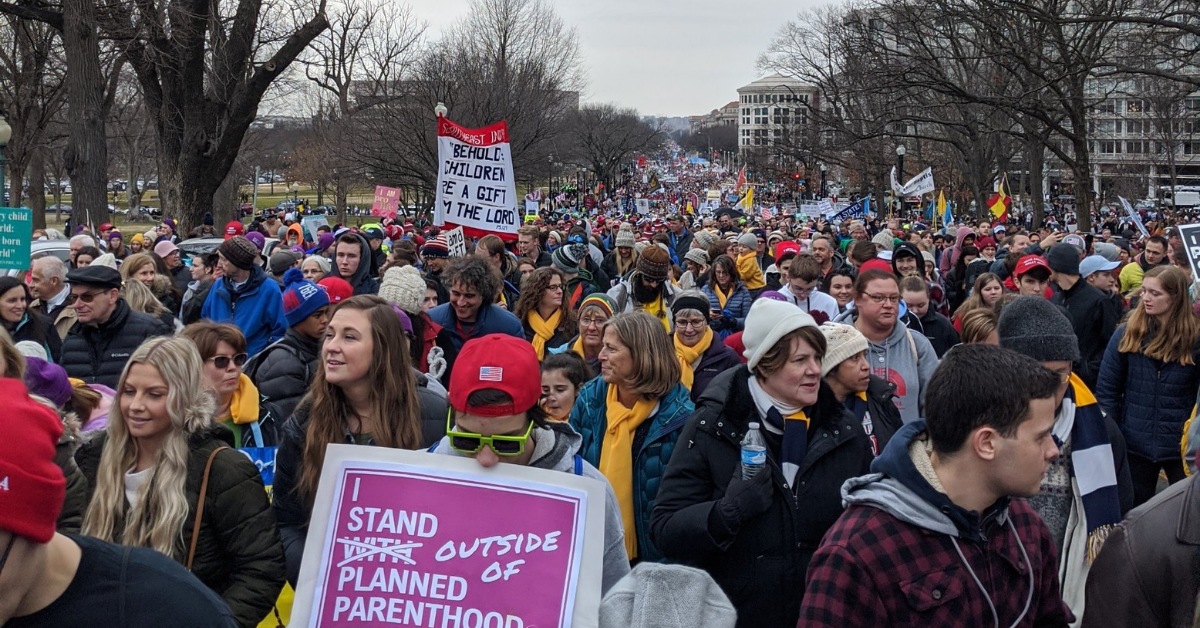
The recent Roe v. Wade anniversary featured pro-life gatherings from the March for Life in Washington, D.C., to San Francisco’s West Coast Walk for Life, to a host of smaller events. Thousands braved frigid temperatures and cumbersome restrictions to stand for life. However, amidst the prayers and speeches to commemorate the 49th anniversary of Roe v. Wade, one group was quietly excluded.

A neglected subset of the abortion holocaust, the victims of fetal tissue research make us so very uncomfortable that, in the name of showing a unified face to the world, the pro-life movement focused instead on the big picture, the easily understandable messages: “Abortion Kills Babies” and “Love them both.”

Among ourselves, we need to ask why—on the anniversary of Roe v. Wade, no less—we were so reluctant to talk about the abortions that have purchased our vaccines? Why, in a year when millions will receive abortion-derived vaccines, did we not remember the victims of fetal tissue harvesting, mourn them, and call for ethical alternatives? This should have been their moment. What a tragic waste of an opportunity.

In their memory, I offer here a tutorial on fetal-tissue research and its connection to the vaccine industry.

Over the past year, the basic facts of COVID-19 vaccines and fetal cell lines have become familiar to most of us. Two elective abortions, decades ago, are responsible for cell lines used to develop or test today’s COVID-19 vaccines. These cell lines are “immortal.” Hence, “no more abortions” will be required. Many explanations hasten to remind us “this is not new technology.”

The basic formula is designed to reassure our consciences: two elective abortions, decades ago. Immortal cell lines. No more abortions. And, finally, it is not new technology, so why the outrage? To understand the true cost of our COVID-19 vaccines, we must unpack this explanation phrase by phrase.

“Only two abortions.” It is true that all COVID-19 vaccines available today use cell lines derived from two abortions. Cell lines, unlike primary cell cultures, can be grown and further multiplied indefinitely once established. HEK 293, used in the development of the Pfizer, Moderna, and AstraZeneca vaccines, was derived from the kidneys of a baby girl of three-months’ gestation aborted in the Netherlands in 1972. PER.C6, used in the development of the Johnson and Johnson vaccine, was derived from the retinas of a baby aborted at 18-weeks’ gestation in 1985.

Yet to say that today’s COVID-19 vaccines are derived from only two abortions is to vastly oversimplify. These abortions were not isolated events. The truth is, the pharmaceutical industry, and the vaccine industry in particular, have benefited from abortion since the 1930s. Long before Roe v. Wade, eugenics laws mandated sterilization for women deemed unfit to reproduce. Abortions were frequently done in tandem with sterilizations. Without running afoul of the law, facilities such as New York’s Bellevue Hospital for “insane and feebleminded women” provided aborted babies for researchers like polio vaccine pioneer Dr. Albert Sabin. Medical literature makes no secret of this.

The creation of a successful human fetal cell line is not a neat science: it may require dozens of abortions. In the late 1960s, scientists Leonard Hayflick and Stanley Plotkin documented 32 abortions in attempts to create the successful WI-38 cell line used for the rubella vaccine. Significantly, Plotkin also documented 27 abortions in his effort to isolate the rubella virus. The resulting virus strain was named from the series: “RA 27/3” indicates “rubella abortus, twenty-seventh fetus, third tissue extract.” These lives were cheap; another 40 babies were then dissected to obtain further virus samples. Thus, at least 99 elective abortions were reported in the research and production of the rubella vaccine.

Similarly, we may assume that the two infants who gave their lives for HEK 293 and PER.C6 were the “successful” ones. They represent the vaccine industry’s longstanding, unscrupulous reliance on the abortion industry.

“Elective abortions.” We are reminded that the abortions in question were elective: a subtle appeal to altruism. While we can’t undo the tragic decision to abort a baby, thankfully we can allow something good to come of the tragedy, the argument goes.

Again, part of this statement is true, but the reality is more nuanced. In the world of fetal tissue research, researchers and abortionists work together to obtain viable tissue. According to biologist and former vaccine researcher Pamela Acker, quoted in Catholic World Report, the process “has to be done in a methodical kind of way in order to obtain the kind of tissue—live tissue—that will be successful for this kind of research.” Spontaneous abortions—miscarriages—are generally not a good source of fetal tissue because the baby frequently dies at an undetermined time before delivery.

Today, prostaglandin abortion is the method of choice when fetal organs are to be harvested. In a prostaglandin abortion, drugs cause uterine contractions and induce labor. The goal is to deliver an intact baby. Feticides like digoxin are not used because they could contaminate fetal tissue. Therefore, the baby is likely delivered alive.

To be clear: when fetal tissue is harvested for transplant or cell culture, the abortion and the harvesting process cannot be said to be different processes. The abortion must be arranged in such a way as to provide the desired organs intact. The baby is, in all likelihood, born alive and—in chilling words one sees over and over in scientific literature on the subject—“dissected immediately.”

“Decades ago.” The implied corollary is “we don’t do that anymore.” The oft-repeated phrase emphasizes remoteness: remote in terms of moral cooperation; remote in years; remote in the assumption, voiced by one bioethicist last year, that “these evils are in the past.”

Certainly, the 1960s and early 70s were a kind of moral Wild West when it came to fetal tissue research. Scientists and journalists were surprisingly frank, even matter of fact. Horror stories began to surface, documented by Suzanne Rini in her 1988 book Beyond Abortion: A Chronicle of Fetal Experimentation: research on live aborted babies in Sweden; still moving babies packed on ice in Pittsburgh to be shipped to the lab; dissection of a live baby for experimentation at Yale.

The public outcry led to Congressional hearings in the United States and a temporary moratorium on fetal tissue research for transplantation. Other areas of fetal tissue research were not impacted, however. And it would be naive to think that after Roe v. Wade the scientific establishment suddenly felt pangs of conscience about its work with aborted babies; on the contrary, it simply became more discreet about its methods, which continue to this day.

While federal restrictions wax and wane depending on who occupies the White House, there is ample evidence that barbaric practices remain the norm, not the exception, when it comes to fetal tissue research. That includes continued development of human fetal cell lines, despite the common misconception that immortalized cell lines, like a fountain of youth, negate the need for new cell lines.

“Immortal” cell lines: no new abortions needed? Can we separate the past creation of HEK 293 and PER.C6 from the atrocities still occurring in the name of fetal tissue research? This seems to be a legitimate question: given the “immortality” of the cell lines used for COVID-19 vaccines, does benefiting from these vaccines feed a demand for further abortions?

As a side note, many vaccines are derived from human fetal cell lines that are not immortal. Common vaccines for polio, chickenpox, and other diseases are derived from the WI-38 and MRC-5 cell lines, neither of which are immortal, although they can admittedly produce an almost unlimited number of cells from a single source.

The so-called immortal cell lines are “particularly successful,” says Acker. They have mutated or been modified to have a much longer lifespan. Nonetheless, scientists acknowledge the term “immortal” is misleading. While immortalized cells may live for a large number of cell cultures, “they won’t live forever.” Acker adds, “They will eventually die and you will no longer be able to subculture them. And at that point you will need another cell line.” In addition, both types of cell lines can “accumulate mutations after replicating in vitro over time.”

Thus the continued need for human fetal cell lines, both finite and immortalized. The current catalogue includes cell lines created from the 1960s through 2015, when Chinese scientists created a new human fetal cell line, Walvax-2, because of concerns about the aging MRC-5 cell line. Their goal was to use the new human diploid cell line in the mass production of vaccines. Walvax-2 involved nine abortions.

Ultimately, a baby girl of three months’ gestation supplied the successful cells.

The abortion industry and its allies confidently anticipate greater demand for fetal tissue: “Scientists are confident that fetal tissue is key to more preventive medicine, new vaccines and identifying treatments for today’s most devastating conditions; research continues, and its course is impacted by global health threats.” That statement, which seems prophetic in light of today’s pandemic, is from the 2016 amici curiae brief in the National Abortion Federation’s suit against David Daleiden’s Center for Medical Progress. Every dose of abortion-derived vaccine validates its claim.

Not new technology. What about the reminder “This is not new technology”? Fetal cell lines have been around for many years, used to develop and test many products, pharmaceutical and otherwise. Why are they controversial now? If we reject abortion-tainted vaccines, must we reject a host of other products? Some make this argument disingenuously, listing medications discovered long before fetal cell lines existed. However, a myriad of products do have some connection to fetal cell lines, particularly the ubiquitous HEK 293. It is virtually impossible to identify and boycott them all.

Yet today’s situation is unique. One type of product, with a clear connection to fetal tissue research, is being urged on an entire population. Ultimately, the vaccine industry, like any other, is about making money. Why are we neglecting this opportunity, in the 2005 words of the Pontifical Council for Life, to “make life difficult for the pharmaceutical industries which act unscrupulously and unethically”?

One more thing must be said concerning vaccines and human fetal cell lines. There is strong evidence that infants used for fetal cell lines are not dead at the time of organ harvesting. This is based both on circumstantial evidence—years of documentation in the industry’s own words—and on the principle that living tissue must come from living organs.

The late, eminent Spanish physician and bioethicist Dr. Gonzalo Herranz summed it up in Vivisection or Science, by Italian scientist Pietro Croce: “[T]o obtain embryo cells for culture, a programmed abortion must be adopted, choosing the age of the embryo and dissecting it while still alive in order to remove tissues to be placed in culture media.”

When I began to investigate this shocking claim last year, I was surprised to find that people had been writing about it for years. When the question of abortion-tainted COVID-19 vaccines arose, it was as if there had been a collective memory wipe, and the debate was begun afresh. What had happened? I believe the answer is found in the dehumanizing language of the pro-abortion movement. Sadly, we have grown accustomed to hearing the term “viable”—able to sustain life outside the womb—used interchangeably with “alive.”

Bioethicist Paul Ramsey, whose book The Ethics of Fetal Research detailed gruesome experiments that came to light in the early 70s, commented that for scientists, “Prospective viability was the only characteristic of humanness or sign of life to be respected in the unborn.”

Language shapes our thinking. From Roe v. Wade through Planned Parenthood v. Casey to Dobbs v. Jackson Women’s Health Organization, the line of viability has muddied our thinking on abortion. That is why we hesitate to believe stories of aborted infants dissected alive. To pro-lifers, killing a baby outside the womb is infanticide. Killing a baby by removal of its organs is vivisection. We forget we are not speaking the same language as our opponents. If a pre-viable baby is “pre-alive,” whether it is killed in the womb or killed by harvesting its organs is inconsequential.

Repeat something often enough, with enough confidence, and people will begin to doubt their own intelligence in the matter. Nowhere is this more obvious than fetal-tissue research.

Research on live, non-viable fetuses continues to obtain tissue for transplant or research. If restrictions are burdensome, it may take place without federal funding, by going overseas, or by obscuring the critical few minutes between delivery of the baby and the time the tissue is sent to the lab. In the words of author Suzanne Rini, “Researchers…who receive tissues from hysterotomy and from second trimester abortions by methods notorious for producing live babies, too glibly state that their tissues come from ‘dead fetuses.’ There is an intermediate stage about which few will talk.”

Information on fetal tissue research is often cloaked in language that means little to the average reader. For instance, a 2011 report in the journal Liver Transplantation describes “in situ vascular perfusion of human FLs [fetal livers] at 18 weeks of gestation and later.” It describes the “tissue dissociation” and subsequent liver removal in detail. Translation: after abortion, liver tissue was removed from 15 living babies. This research made it into the textbooks: page 283 of Hepatocyte Transplantation, to be precise, which describes the procedure more accurately as a “five-step in vivo perfusion method by umbilical vein cannulation to isolate liver cells from fetuses at the late second trimester.” Note the phrase in vivo (“in the living”).

While the procedure described above was done in the name of transplantation, not cell culture, the rationale is identical: obtaining the freshest tissue possible.

Supreme Court Justice Sonia Sotomayor, during oral arguments in Dobbs v. Jackson Women’s Health Organization, sparked outrage when she compared the unborn to brain-dead patients. Her artless statement was actually a moment of truth. Like the brain-dead, aborted babies make excellent organ donors. A pre-viable infant organ donor may be outside the womb, breathing, heart beating, but for all intents and purposes, he or she is dead.

Downplaying the brutal facts of fetal tissue harvesting supports the dehumanizing of the aborted child. It buys into the abortion timeline that defines a baby as a non-person as soon as its mother decides to kill that baby.

The Catholic Church made headlines last year with its repeated assurance that Catholics could accept abortion-tainted vaccines. Little attention was given to protesting abortion-tainted vaccines or demanding ethical alternatives—perhaps a tacit admission that letters mean little, while money talks. Now the subject of these vaccines is so charged that it cannot or will not be mentioned at pro-life events. This gives the lie to those who think we can simultaneously accept tainted vaccines and protest their use.

We walked for life January 22nd in cities across the United States. Here in Los Angeles, OneLife LA organizers asked me, politely, to leave my “no abortion-tainted vaccines” signs at home. Shining a light on the most horrific corners of a horrific industry would have to wait. Clearly, it is a stumbling block.

By Monica Seeley

Christentum

Die Schönheit und Last der Erkenntnis des Bösen

September 19, 2020 by Admin Keine Kommentare

„Seien Sie selbstbeherrscht und wachsam. Dein Feind, der Teufel, streift umher wie ein brüllender Löwe und sucht nach jemandem, den er verschlingen kann.“ – 1. Petrus 5:8

Ein bedeutendes Problem, das die Kirche in den Vereinigten Staaten von Amerika plagt, ist ihr Kampf, die Realität des Bösen zu erkennen und anzuerkennen – insbesondere in unserem eigenen Land. Missionare in anderen Ländern haben oft eine andere Perspektive, sie sehen Dinge, die wir nicht sehen, und erleben Dinge, die wir nicht erleben. Das Böse ist für sie real .

Hier in den USA leben wir seit Generationen in relativer Leichtigkeit im Vergleich zu den Kämpfen, mit denen so viele auf der ganzen Welt konfrontiert sind. Amerikanische Christen hatten den Luxus, sich manchmal für Naivität zu entscheiden. Unbewusst zu sein mag sich leichter anfühlen, weil die Realität des Bösen schwer ist.

Burden of the knowledge of evil

Unser Bewusstsein des Bösen war nicht Teil von Gottes perfektem Plan im Garten. Er warnte Adam und Eva davor, die Frucht des Baumes der Erkenntnis von Gut und Böse zu essen: „Denn Gott weiß, dass dir die Augen geöffnet werden, wenn du davon isst, und du wirst wie Gott sein und Gut und Böse erkennen.“ (Genesis 3:5).

Adam und Eva wussten bereits gut. Tatsächlich kannten sie NUR Gottes vollkommene Güte und Frieden. Gottes Gebot bestand nicht darin, das Gute vorzuenthalten, sondern es schützte sie vor der Last der Erkenntnis des Bösen .

Satan überredete Eva verführerisch, Gott in Frage zu stellen. Sie ließ Ihn aus den Augen, ließ sich täuschen und verfiel in Sünde. Adam folgte sofort. Von diesem Moment an trugen sie die Last der Erkenntnis des Bösen … und wir auch als Folge des Falls. Und es ist eine Belastung. Eine Last, vor der Gott uns schützen wollte.

Dieses Wissen kann sich manchmal sowohl schwer als auch überwältigend anfühlen. Unsere menschliche Tendenz besteht darin, sich vom Bösen abzuwenden. Wir wollen oft gar nicht wissen, dass es existiert. Wieso den? Ist es so, dass wir uns hilflos fühlen, es zu ändern, und dass wir unseren Glauben an den Charakter Gottes auf die Probe stellen, wenn wir uns damit auseinandersetzen? Vielleicht liegt es daran, dass das Böse schmerzhaft ist.

Das Böse und der Schmerz gehen Hand in Hand. Schmerz ist Teil der menschlichen Erfahrung und wir wenden uns oft davon ab. Wir haben es manchmal schwer, nicht nur mit unserem eigenen Schmerz zu sitzen, sondern auch mit anderen in ihrem Schmerz präsent zu sein.

Generell vermeiden wir, Schmerzen verspüren zu müssen.

Sacrificial love

Im Gegensatz zu unserer Neigung, vor Schmerz davonzulaufen, neigt sich das mitfühlende Herz Gottes in unseren Schmerz . Er weint mit uns und schließt sich unserem Schmerz an. Auf diese Weise liebt er uns, indem er sein Versprechen hält, uns niemals zu verlassen oder im Stich zu lassen.

Ebenso ruft er uns durch seine Gnade auf, andere zu lieben, indem wir in ihren Schmerz eintreten – gegen die Ungerechtigkeit aufzustehen, für die Geringsten einzustehen, den Stimmlosen eine Stimme zu geben, in die Leprakolonie einzutreten und sie zu lieben und zu lieben die Frau, die nach den Maßstäben ihrer Zeit hätte gesteinigt werden sollen.

In unserer Kultur neigen wir dazu zu denken, andere zu lieben bedeutet, sie so zu akzeptieren, wie sie sind, oder sie nicht zu beurteilen. Was ist, wenn die Liebe, zu der Gott uns ruft, Opfer beinhaltet – das Opfer, in die Welt eines anderen einzutreten, einschließlich ihres Schmerzes?

Wir haben uns zu lange für Naivität entschieden. Die Tiefe des Bösen in dieser Welt ist so viel tiefer, als viele von uns erkannt haben oder bereit waren zuzugeben. Naiv zu bleiben bedeutet, uns noch mehr Täuschung zu öffnen. Wir müssen bereit sein, uns auf die schmerzhaften Dinge einzulassen, mit der Wahrheit des Bösen nüchtern zu sein. Böses BÖSE nennen. Und nachdem wir das Böse unserer Zeit anerkannt haben, das Evangelium von den Dächern zu rufen, denn es ist unsere einzige Hoffnung.

Our Enemy

Satan ist kalkuliert und geduldig, bereit, sich Zeit für die Umsetzung eines Plans zu nehmen. Er ist manipulativ, ein Meister darin, einen Kern der Wahrheit zu verdrehen. Das Schlimmste ist vielleicht, dass er ungezügelt böse ist und nichts zu verlieren hat, denn sein Schicksal ist bereits besiegelt. In Hollywood-Filmen sind die furchteinflößendsten Schurken diejenigen, die absolut nichts zu verlieren haben… sie wollen anderen ohne Zurückhaltung maximalen Schmerz und Zerstörung zufügen. Diese Charaktere sind ein Schatten des bloßen Bösen, das in Satan selbst vorhanden ist.

Der Einfluss der Bosheit Satans ist vielleicht nicht so verborgen, wie wir denken. Denken Sie an Hitler, Stalin, Lenin und Mao. Rückblickend würden viele fragen, wie sie an die Macht kommen konnten, um einen so abscheulichen, unsäglichen Mord zu begehen. War es, dass niemand um sie herum ihre Pläne kannte und wozu sie fähig waren, oder war es zum Teil die Naivität der Leute, die nicht glauben wollten, dass es so etwas Böses geben könnte?

Wenn wir uns entscheiden, dem Bösen um uns herum naiv gegenüberzustehen, wird es gedeihen.

Welches Übel tolerieren wir heutzutage, das zukünftige Generationen dazu bringen könnte, zu sagen: „Wie konnten sie das nicht sehen?“

Beauty in the darkness

„Denn unser Kampf richtet sich nicht gegen Fleisch und Blut, sondern gegen die Herrscher, gegen die Obrigkeit, gegen die Mächte dieser dunklen Welt und gegen die geistigen Mächte des Bösen in den himmlischen Reichen.“ – Epheser 6:12

Wir dürfen das Böse nicht unterschätzen oder die Augen verschließen. Schönheit und Erlösung können in der Dunkelheit gefunden werden. Die Bosheit, die wir zu ignorieren versucht sind, repräsentiert genau die Menschen, die die Hoffnung des Evangeliums am dringendsten brauchen. Wo Böses ist, müssen Salz und Licht eindringen, damit das Evangelium verkündet und empfangen werden kann (Matthäus 5:13-16). Salz dient dazu, den Verfall zu stoppen, und Licht scheint in der Dunkelheit und enthüllt das Böse. Wenn Gott in die Dunkelheit eindringt, wird das Böse enthüllt, zurückgehalten und neues Leben in Christus kann entstehen.

Indem wir das Böse anerkennen, wird uns eine unglaubliche Gelegenheit gegeben, als Botschafter Gottes in die Dunkelheit einzutreten, die das Vorrecht haben, Hoffnung und Leben durch Christus zu verkünden.

Wenn wir das Böse nicht aufdecken, wer wird es dann tun? Wir, die wir in Christus verwurzelt sind, sind die einzigen, die wahre Hoffnung und Licht in die Dunkelheit bringen können. Jesus sagte, dass es Opfer erfordern würde, ihm nachzufolgen. „Wer mir nachfolgen will, muss sich selbst verleugnen und sein Kreuz auf sich nehmen und mir nachfolgen“ (Matthäus 16,24).

Nimm dein Kreuz heute auf. Geben Sie ein.

Sprachen

  • Deutsch
    • English (Englisch)
    • Nederlands (Niederländisch)

Sie wundern sich über Impfungen und Abtreibung? Sehen Sie sich das jetzt an.

https://avoicefortruth.com/wp-content/uploads/2021/01/Abortion-vaccines-video.mp4

„It’s Ok“ from Choice42.com

Populäre Artikel

Überstürzte Impfstoffe, die den Amerikanern geschadet und gescheitert sind? Wir waren schon einmal hier.

Überstürzte Impfstoffe, die den Amerikanern geschadet und gescheitert sind? Wir waren schon einmal hier.

25/02/2021
COVID-19-Ressourcen und Informationen

COVID-19-Ressourcen und Informationen

31/03/2021
Steuerzahler finanzieren die Erforschung des menschlichen Fötusgewebes nach Abtreibung… wieder

Steuerzahler finanzieren die Erforschung des menschlichen Fötusgewebes nach Abtreibung… wieder

18/04/2021
     SIGN the Vaccine
     Position Statement

Lassen Sie uns verbinden!


Aktuelle Artikel

Now that I know, what can I do? 10 attainable action steps.

Now that I know, what can I do? 10 attainable action steps.

15/06/2023
Gesetzgebung für Überlebende der Abtreibung von Neugeborenen in Gefahr, auch wenn Tausende den Marsch für das Leben feiern

Gesetzgebung für Überlebende der Abtreibung von Neugeborenen in Gefahr, auch wenn Tausende den Marsch für das Leben feiern

22/01/2023
Warum der Blackout bei der Forschung zu fötalem Gewebe unter den Pro-Life-Anhängern?

Warum der Blackout bei der Forschung zu fötalem Gewebe unter den Pro-Life-Anhängern?

09/02/2022
Update 2021: COVID-19-Impfstoffe mit abgebrochenen fetalen Zelllinien

Update 2021: COVID-19-Impfstoffe mit abgebrochenen fetalen Zelllinien

14/11/2021
Hilfe bei der Beantragung religiöser Ausnahmen von Impfungen

Hilfe bei der Beantragung religiöser Ausnahmen von Impfungen

24/08/2021
Steuerzahler finanzieren die Erforschung des menschlichen Fötusgewebes nach Abtreibung… wieder

Steuerzahler finanzieren die Erforschung des menschlichen Fötusgewebes nach Abtreibung… wieder

18/04/2021
COVID-19-Ressourcen und Informationen

COVID-19-Ressourcen und Informationen

31/03/2021
Überstürzte Impfstoffe, die den Amerikanern geschadet und gescheitert sind? Wir waren schon einmal hier.

Überstürzte Impfstoffe, die den Amerikanern geschadet und gescheitert sind? Wir waren schon einmal hier.

25/02/2021
Die Schönheit und Last der Erkenntnis des Bösen

Die Schönheit und Last der Erkenntnis des Bösen

19/09/2020
COVID-19-Impfstoffe verlangen eine Aufhebung des Forschungsverbots für fetales Gewebe

COVID-19-Impfstoffe verlangen eine Aufhebung des Forschungsverbots für fetales Gewebe

30/04/2020

Kategorien

  • Christentum
  • Covid-19 Impfung
  • Impfstoffe und Abtreibung

Schlagwörter

Abbruch Abtreibungsabgeleitete fetale Zelllinien Bibel böse Christen Christian Coronavirus COVID-19 Covid-19 Impfungen COVID-19-Impfstoffe und das Christentum die Gesundheit DNA Einwände aus Gewissensgründen Fötale DNA fötale Gewebeforschung fötales Gewebe fötale Zelllinien für's Leben Gesetzgebung Gewissensschutz Impfbefreiung Impfdebatte Impfstoffmandate Impfstoffsicherheit Impfungen Impfvorschriften des Arbeitgebers katholisch Marsch für das Leben Menschenhandel Nebenwirkungen Nebenwirkungen Religion religiöse Ausnahme Satan Sicherheit Tod Wissenschaft wissenschaftliche Forschung

Archiv

  • Juni 2023
  • Januar 2023
  • Februar 2022
  • November 2021
  • August 2021
  • April 2021
  • März 2021
  • Februar 2021
  • September 2020
  • April 2020
  • Februar 2020
  • Januar 2020
  • Oktober 2019
  • Januar 2019
© 2022 copyright A Voice For Truth // Alle Rechte vorbehalten
  • English
  • Deutsch
  • Nederlands